
Encounters with Photography: Interpreting Photos and Imagining Future Spectators
Encounters with Photography: Interpreting Photos and Imagining Future Spectators
Exploring and Developing a Reparative Praxis
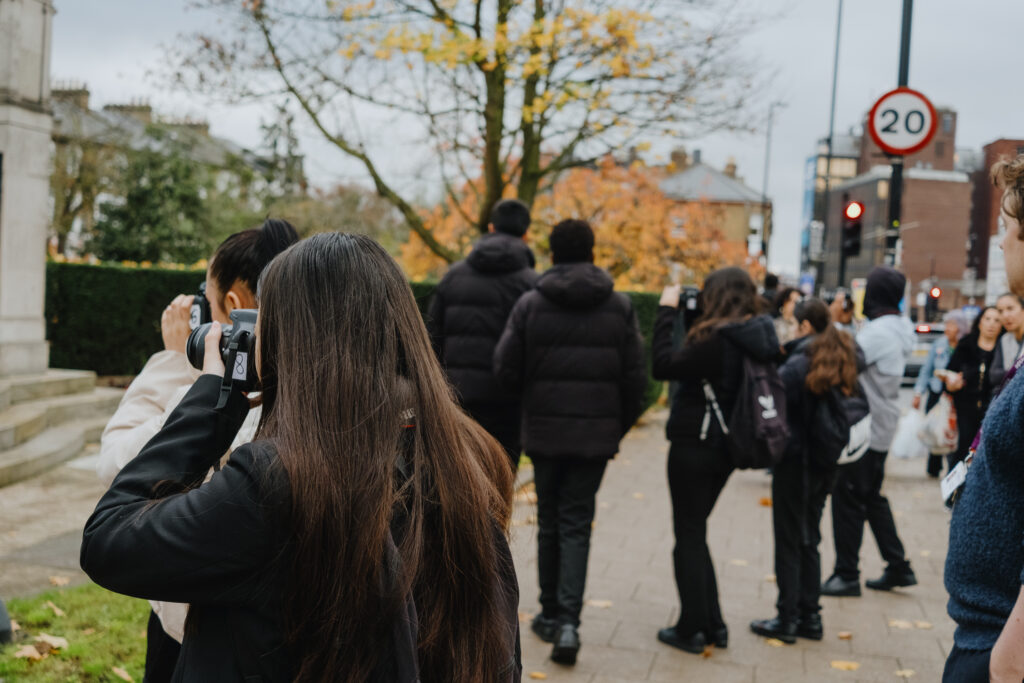
This post explores how encounters with photographs generate meaning. Drawing on experiences with my community interest company, Global Routes Project CIC, and developing research with the Repair-Ed project, I reflect on ideas informing my upcoming research in Bristol (2026). These reflections combine my work with children, photography theory, personal encounters with images, and ongoing dialogue with my CIC co-directors, Khali Ackford and Ploipailin Flynn, whose perspectives are woven throughout this post. Khali is a Bristol-based photographer and Ploipailin is an applied AI researcher and co-founder of AIXDESIGN.
November 2025
A commitment to collaborative, creative and critical practices
My developing research is a commitment to working towards systemic change in education by prioritising meanings that are generated through encounters with people and places and collaborative, creative and critical practices.
My own education was fragmented. I chose refusal at secondary school and dropped out of college in the first term. Like many others, I learnt outside the institution, through seeking to understand my Anglo-Indian heritage: diasporic communities in India, diverse in heritage yet administratively and racially categorised by the British Raj. I found knowledge in the UK’s Grime, Drum and Bass, and Dubstep scenes, cultural forms shaped by the UK’s multiple diasporic, creative communities where I became a photographer; communities that reimagine an unjust world through resistant and political lyricism, diasporic sound, movement, and visuals.
Later, as a primary school teacher, I experienced a disconnect between the fixed framings of past and present communities in school curricula and the complex, overlapping, entangled realities of people’s lives. Whilst teaching, I have been photographing local people and places near my home in East London which inspired Global Routes Project CIC, a community interest company through which children document places and co-create photographic meaning.
Unpredictable Encounters
WALT: Unknown
In many primary classrooms in England, lessons begin with an L.O. (Learning Objective) or WALT (We Are Learning To…). I recall teaching an observed Key Stage Two English lesson, planned with my co-teacher, where children explored historical counter-narratives by imagining unseen texts. They were debating ideas, shaping stories, and experimenting with language. Yet our feedback afterwards was that the L.O. should have been a grammar skill from the National Curriculum. Such formal systems often prioritise measurable outcomes over interpretation, where even grammar risks becoming an end in itself rather than a creative tool for expression and meaning-making.
The photography workshops that I create with children involve photo-walks where the learning outcomes are co-created and discovered. Walking helps us connect with spaces and observe. Anna Lowenhaupt Tsing describes the unexpected pleasure of finding mushrooms when walking and continues with mushrooms as a detailed metaphor for the unpredictability of our condition, arguing that we need to reopen our imaginations to the entanglements of our experiences (2021, pp. 4–5).
Like Tsing, I find pleasure in unexpected encounters during walking. Just last week on a photo-walk with Khali, children in Haringey encountered a Brazilian street cleaner in Wood Green who was a trained bus mechanic. He hoped to build confidence in his English to return to his passion. Later the children interviewed some drivers at a bus depot and were invited to explore the stationed bus, which was particularly exciting for one child who had a special interest in buses and bus routes.
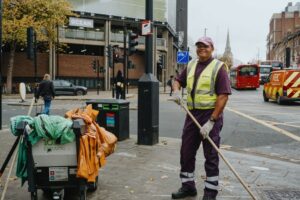
Figure 1: Roberto, Photo-walk, Wood Green 2025
Walking with a camera is different again to walking; it draws attention to people, places, actions and details we might otherwise pass without notice. Each frame becomes an opportunity to select, position, or reimagine a moment in another context — to make space for unpredictable meanings to emerge. An important implication of unpredictability is that it allows children to express their concerns and questions, prioritising diversity of exchange and interpretations.
Photography and Dialogue
Meanings of photographs are negotiated with dialogue. A child from Wood Green explained to me that her photo of an alleyway was interesting to her because alleyways are spaces that you don’t want to go, but the graffiti in the alleyway showed that someone in the past had been there. She creatively connected this contrast with the aesthetic contrasts of dark and light in the photo. I couldn’t have made this interpretation from the image alone but found her insight inspiring. Where else are there signs that people have entered uninviting spaces?
Photography in research is often treated as ‘data’: a visual record for analysis, categorisation, or coding. But photos are generative; I approach photographs as encounters — moments where interpretation, affect, and imagination intersect. Rather than extracting evidence, meanings are co-created, foregrounding the unpredictable, relational, and emotional ways we make sense of shared experience.
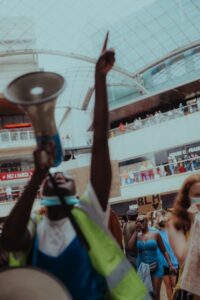
Figure 2: Black Lives Matter, 2020, Khali Ackford. Image provided by Ackford
In preparation for my research, I began looking at photographs of Bristol. This photograph (Figure 2) was taken by Khali during the Black Lives Matter protests in 2020. Situated in Cabot Circus Shopping Centre, the image depicts a crowd holding BLM (Black Lives Matter) placards. John Cabot, an Italian seafarer who departed from Bristol and landed in Newfoundland in 1497, gives the centre its name. Initially proposed as ‘The Merchant’s Quarter’, the shopping centre sparked controversy due to its celebratory framing of the city’s colonial past (BBC News, 2007). Matt Clement notes that the centre opens westwards, cutting off the east (2007, p. 104). This design mirrors socio-economic disparities between Bristol’s affluent west and the city’s diverse communities in the east.
I am interested in how it brings the present (the protest) into relation with the past (Cabot and Bristol’s colonial histories), opening possibilities for discussions about the future. Ackford offers ‘visual activism’ by ‘making visible’ local resistances within historically connected and economically divided geographies of the city (Mirzoeff, 2023, pp. 3–4). The location and Ackford’s framing foreground the city’s multiple divisions—symbolic, memorial, economic, physical, imagined and resisted—opening discursive potential. My interpretation is shaped by my experiences in Bristol, my understanding of Ackford as a visual activist, and literature about the city’s histories.
Khali’s interpretations are based on his experience as the photographer. When I shared my perspectives with Khali, he was intrigued: “You probably see things that I don’t see.” He explained that he had been interested in the people observing on the balconies. My encounter with the photograph was shaped by the setting, his by the unfolding moment during a protest. Khali explained that at the time, he had been experimenting with switching the traditional use of aperture, placing the foreground figure out of focus and the background in focus. But he also admitted that, in the moment, there is rarely time to construct a narrative—much of what is captured is unpredictable. Ariella Azoulay argues that the photograph and its meaning is the unintentional effect of an encounter between the photographer, photographed, the camera and the spectator (2008, p. 23).
Our interpretations of this photo have been co-created by the event, the encounters with people in a specific moment and our interpretations and dialogue afterwards. We later shared the photograph with the group of children in Wood Green. One child observed, “There are lots of white people on the balconies.” Khali responded directly using the statement as an entry point to explain the purpose of a protest: to disrupt everyday life to say, “This is more important.” This exchange highlights the importance of dialogue accompanying a photograph. The image carries more meaning than a page of text might convey, yet it also requires context and discussion.
In a later discussion, Khali, Ploipailin and I discussed the purpose of photography. I had mentioned to Khali the large sums for which images of the protest—particularly those of the Colston statue were being sold for online and asked if he was doing the same. “That’s not the point though,” he replied. He explained that he wouldn’t want anyone taking and misappropriating his photographs and would prefer that people came directly to him so that context is central.
Ploipailin has been co-leading a project ‘Small AI’ rejecting the bigger-is-better narrative to build AI systems grounded in place, process and communities. She asks, “What happens when we stop prioritising scale and profits, but instead optimise for cultural creation or preservation?”
The Imagined Future Spectator
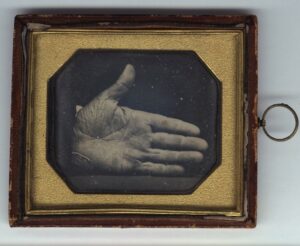
Figure 3: ‘The Branded Hand of Captain Jonathan Walker,’ daguerreotype by Southworth & Hawes, 1845, Daguerreotype Collection, photograph number 1.373, Massachusetts Historical Society (reprinted with permission)
Children’s understanding of the world is shaped by images, often passively consumed without interrogation of their origins or purpose. Azoulay and Debbie Lisle both discuss the encounter of viewing a photograph (Azoulay 2008, Lilse, 2013). The meaning of a photograph can be developed with each new encounter.
Azoulay outlines the ethical contract between ‘photographers, photographed persons, and spectators’ (2008, pp. 20-26). She exemplifies this point in a description of The Branded Hand of Captain Jonathan Walker (Figure 3), a photograph taken by Jonathan Walker in 1845, only six years after the birth of photography. The palm is branded with SS (Slave Stealer) for his crime of freeing enslaved people (Azoulay, 2008, pp. 20-26). The photo carries the potential to consider how an image from the past might be understood in the present, and to critique past systems. It provides a prompt for children to imagine past actions, a photographer’s intentions and future systems.
Lisle describes the powerful ‘punch’ of the photograph as the central moment of encounter in which a complex photograph-viewer assemblage is revealed (2013, p. 147). As a future spectator of Captain John Walker’s photo in 2025, there is a power in the meanings that transverse space and time. In contrast to fixed knowledge systems, meaning-making values affective responses as integral to sense-making.
I propose the imagined future spectator as a concept for inspiring photography practice, an imaginary figure for children to explore the affected responses a photograph/dialogue assemblage might prompt. Building on this, Ploipailin invites us to imagine future non-human spectators: AI systems that process, archive and ‘interpret’ images in the future. She explains AI is a normative tool that finds the most probable outcome from the data it’s trained on. She argues, “All data is data, even missing data is data.” She is interested in people creating their own small archives. Together we question, if people make their own archives, who is the imagined future human or non-human spectator and what data have we created for them to imagine or create the futures we want to experience?
Exploring a Reparative Praxis
Across these encounters, photography might emerge as a tool for collaborative analysis and ethical reflection. Some key principles we consider in our workshops are:
- Treating photographs as encounters
- Valuing co-creation for interpretation, including affected responses
- Embracing unpredictability and relationality
- Considering the human and non-human imagined future spectators
- Practising consent and analysis with care
These perspectives encourage us to think ethically about data and image circulation. The photographs that we take and share might one day be interpreted by an imagined future spectator. With careful curation of consent and reflection, what context, annotations, or metadata ensure that future viewers, human or non-human, understand the communities shown. Photography can become a tool not only for analysis today, but for anticipatory, reparative engagement in an imagined future.
References:
Azoulay, A. (2008) The Civil Contract of Photography. New York: Zone Books.
BBC News. (2007, February 26). New shopping centre name revealed. BBC News. http://news.bbc.co.uk/1/hi/england/bristol/6396919.stm
Clement, M. (2007). Bristol: ‘civilising’ the inner city. Race & Class, 48(4), 97-105. https://doi.org/10.1177/0306396807077088 (Original work published 2007)
Flynn,P., Nadesan, N., Piet, N., Vieira, S., Kothari, K., & Marques, A. (2025). Small AI. Stimuleringsfonds Creatieve Industrie.
Available at: https://drive.google.com/file/d/17Be8S8GK_0HkaCPSJvko4NGbpuBx1Uca/view
Lisle, D. (2011) ‘Moving encounters: The affective mobilities of photography’, in Bissell, D. and Fuller, G. (eds.) Stillness in a mobile world. 1st edn. Abingdon: Routledge, pp. 139-152
Mirzoeff, N. (2023). An Introduction to Visual Culture (3rd ed.). Routledge. https://doi.org/10.4324/9780429280238
Tsing, A.L. (2015) The Mushroom at the end of the World: On the Possibility of Life in Capitalist Ruins. Princeton, NJ: Princeton University Press.