
Oracy as Culture: Plural Social Justice in Action
Oracy as Culture: Plural Social Justice in Action
-
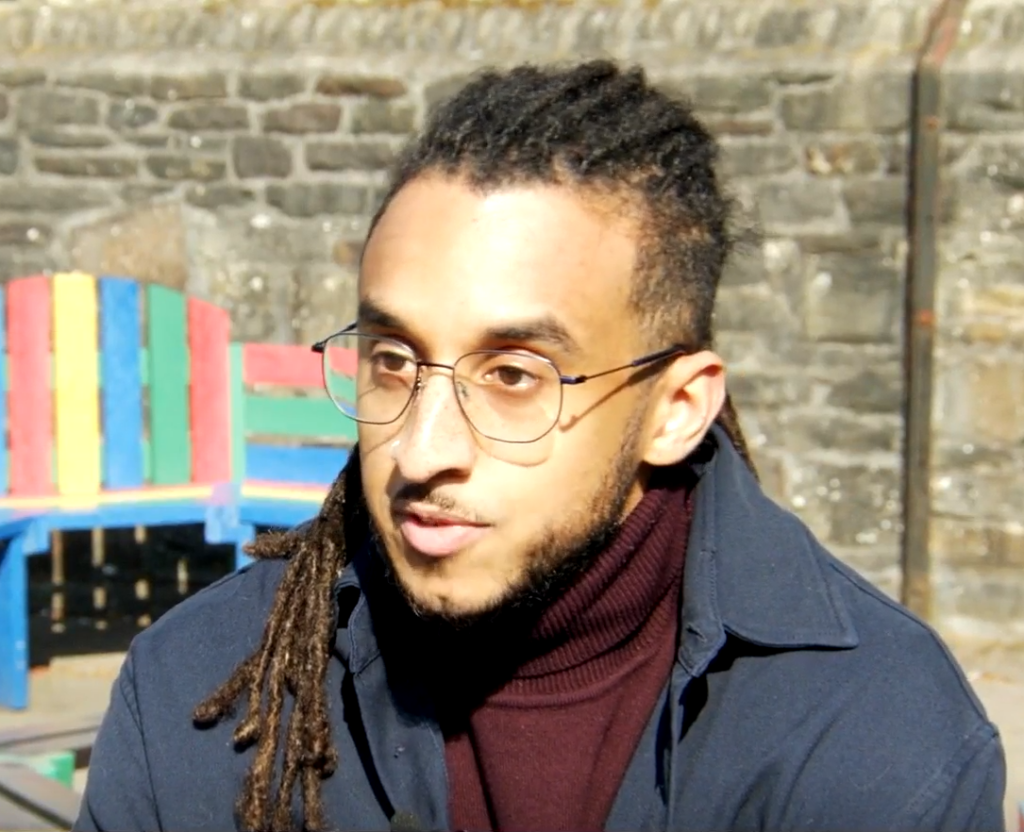 Luke Wilson-Reid
Luke Wilson-Reid is an Associate Assistant Principal and Education Researcher. His work investigates the intersection of oracy, classroom culture and social justice. Luke is currently completing a Master’s in Education and conducting a research project with Repair-Ed examining tensions within oracy and equity in the primary classroom.
January 2026
Author’s Note
This piece is written in the spirit of professional learning and in solidarity with colleagues committed to making oracy liberating. It critiques implementation choices and cultural norms, not any single school or organisation. My aim is constructive: to surface tensions so that we can build inclusive, plural practices together.
Introduction
“What do we mean by ‘pre-history’?” – a question posed to my Year 6 classroom, during a history lesson on pre-historic Britain. A question with a neat, pre-defined, “correct” answer.
Across 2 minutes of partner talk, the historians turned towards each other, sharing their thoughts, scribbling notes on their whiteboards and preparing for our whole-class discussion. Exploring the makeup of the word ‘pre-history’, the discussion moved from ‘before history’ to ‘before recorded history’ to ‘before a written record of history’.
Ideas bounced around the room like a volleyball. We were placing a lot of value on writing, so we stopped to explore that. The children recognised that the ancient Britons had culture and history, and that present civilisations have culture and history, even with the absence of writing. We held space to explore that more.
One pupil expressed that the invasion of the Romans moved the British forward, by “making them stronger”, and that the Celts were now Roman and Roman meant strong. Power and military strength made it a positive thing. One pupil stood up to share his thinking, lost his place, tripped over his words and paused – the class silent and ready to hear him. He asked, “If it was a good thing, then why did the Celts fight back?”
“What do we mean by pre-history?” – the question with the neat, pre-defined, “correct” answer – was so much more than just that. But what made that possible? This discussion illustrates so much about our classroom culture.
This moment reveals what can happen when power is decentred from the teacher, what happens when children are trusted to use their authentic voice and to use talk to grapple with understanding, what happens when children feel safe to take risks and to take up space. It reveals what can be achieved with oracy.
Within this blog, I outline the tensions related to narrow oracy frameworks and normalising practice, how these ignore the ways in which oracy intersects with classroom culture and belonging, and how these tensions are predominantly felt by marginalised groups. It is my aim to explore what liberating, inclusive oracy practice within the primary classroom should entail.
Why oracy matters for culture: “We do oracy here: the children stand up to speak”
Oracy is commonly framed as the skills of speaking and listening, and, in many contexts, is reduced to “We do oracy here: the children stand up to speak”.
Oracy is as much about culture as it is about talking (or standing). It is the feel of the classroom when you walk in. It is the relationship between pupils and their teacher, and with pupils and each other. It is the power in the room, and where that is positioned. It is making space for authentic voice, helping pupils know that what they have to say has value, and creating the expectation that they will be listened to. Oracy is belonging.
This is a practice that is enacted in every interaction with every child, every day. It is upheld through our routines and expectations, and, in the best examples, it is treated with the same urgency as attainment.
As an Education Researcher and Raising Attainment Lead, I am often asked about the systems in place that drive attainment. I have so often experienced inclusive oracy practice and positive shifts in classroom culture as dialogue is centred. Dialogue increases academic engagement, understanding and attainment. This connection between oracy, classroom culture, and teaching and learning is woven so tightly that I cannot conceive of separating these strands, and so much of that is missed in sloganized definitions of oracy.
A true oracy, a liberating oracy, is one in which the definitions of oracy are as plural as definitions of social justice, encompassing access, participation and recognition.
The risks of narrow frameworks: the teaching of talk and the silencing of voices
“For him, there is only one way out, and it leads to the white world.”
Frantz Fanon (1952)
Oracy as culture and as a vehicle for social justice is deliberate practice and has to be designed and implemented intentionally with this purpose. With the increasing focus on oracy nationally, with greater significance placed on the practice in the new OFSTED framework, one of my key concerns is that oracy risks being shortcut to practices that narrow what oracy must be, towards oppressive or culturally imperialistic norms, and towards frameworks that do not encompass the link between oracy, classroom culture and social justice.
What message do frameworks that police standing as good physical oracy stress for those unable to stand? What about the child with ADHD so focused on looking like he is listening, so desperate to be rewarded for his tracking of the speaker, that there is too little headspace left to actually listen? How about the black pupil told that “Aks is wrong – it’s ask” – rather than being provided with an opportunity to think critically:
Is there ever a “wrong” with dialect?
How does aks connect you with something bigger?
What choices could we make dependent on our audience or context?
It is my goal in this piece not to simplify the understanding of a liberating oracy, but rather to complicate it. If we are taking plural definitions of oracy, we must think critically about who we are designing our framework for (and, therefore, who are we excluding?) and what norms are implicit. Otherwise, the social justice work that we are celebrating is, in reality, reproducing injustice – just in a more palatable package.
Towards plural social justice
The pushback on this is often one that emphasises oracy’s role in social mobility and warns that we must not leave children under-prepared for the harsh world in which they live – as if the world is fixed, and so is their position within it. Under such a perspective, though, belonging is conditional: you belong, so long as you fit in, and so you better fit in. Marginalised groups are further marginalised and there is no chance for any change to hierarchies of power. This is something that I keep coming back to – a kind of trauma associated with social mobility, described by Diane Reay in her ‘Miseducation’ and palpable in Katriona O’Sullivan’s ‘Poor’. A trauma where the burden to change is placed upon the individual and, because of this, even when social mobility has got you through the door, you still don’t belong.
Drives on social mobility, and oracy for social mobility, don’t do enough to recognise this: that mobility without authentic belonging is a loss, to be mourned, and, when this is presented as “the only way out”, where does that leave you?
There is another option. We can trust children and bring them into the game we are asking them to play in a way that uses ‘talk’ or dialogue to support them to think critically and make language choices for themselves (Bourdieu, 1990; Flores, 2020). In doing so, we provide the tools to navigate the world, but also to investigate and critique it. We are giving them the space to speak a true word and to transform the world. This thinking is the lens guiding my work with Repair-Ed, examining the tensions within oracy, and how to promote that reflective equilibrium between inclusive classroom cultures and liberating oracy practice, building towards a framework for practitioners.
Actions for practitioners: “This is your space, as much as it is mine”
But what are we to do with this in the immediate? What should be your first steps as a practitioner concerned with oracy for social justice?
I would encourage you to be curious, and critical. I would ask you for the courage to critique norms in your setting and to consider the culture that you are reinforcing in your every interaction, every day. Examine what tensions exist within your classroom or setting: whose voices are being empowered, and whose are being silenced? Centre and privilege the marginalised, and remember that authentic belonging includes the right not to be judged against a normative way of being.
I would also encourage you to make deliberate choices with the language that you are using within your classroom. Praise and value authentic contributions to make sure that every child in your room knows that you see them and that they belong, remembering that your work is with them, as much as it is for them: praise children for taking up space and make it clear to all pupils within your classroom that this is their space, as much as it is yours.
Disclaimer
Views expressed are my own and do not represent those of my employer. The classroom vignette is anonymised; no pupil-identifying information is included. The purpose of this article is to enrich professional discourse and practice across contexts.
References
Bourdieu, P. (1990). The Logic of Practice (R. Nice, Trans.). Stanford University Press.
Fanon, F. (2008). Black skin, white masks (R. Philcox, Trans.). Grove Press. (Original work published 1952)
Flores, N. (2020). From Academic Language to Language Architecture: Challenging Raciolinguistic Ideologies in Research and Practice. Theory Into Practice, 59(1), 22–31. https://doi.org/10.1080/00405841.2019.1665411
Freire, P. (2017). Pedagogy of the Oppressed (M. B. Ramos, Trans.). Penguin Classics. (Original work published 1968)
O’Sullivan, K. (2023). Poor: Grit, Courage, and the Life‑Changing Value of Self‑Belief. Penguin Random House.
Reay, D. (2017). Miseducation: Inequality, Education and the Working Classes. Policy Press.
Guest contributions to the Repair-Ed blog represent the perspectives of the authors.