
School Is a Place I Carry: A Research Reflection on “Beef”
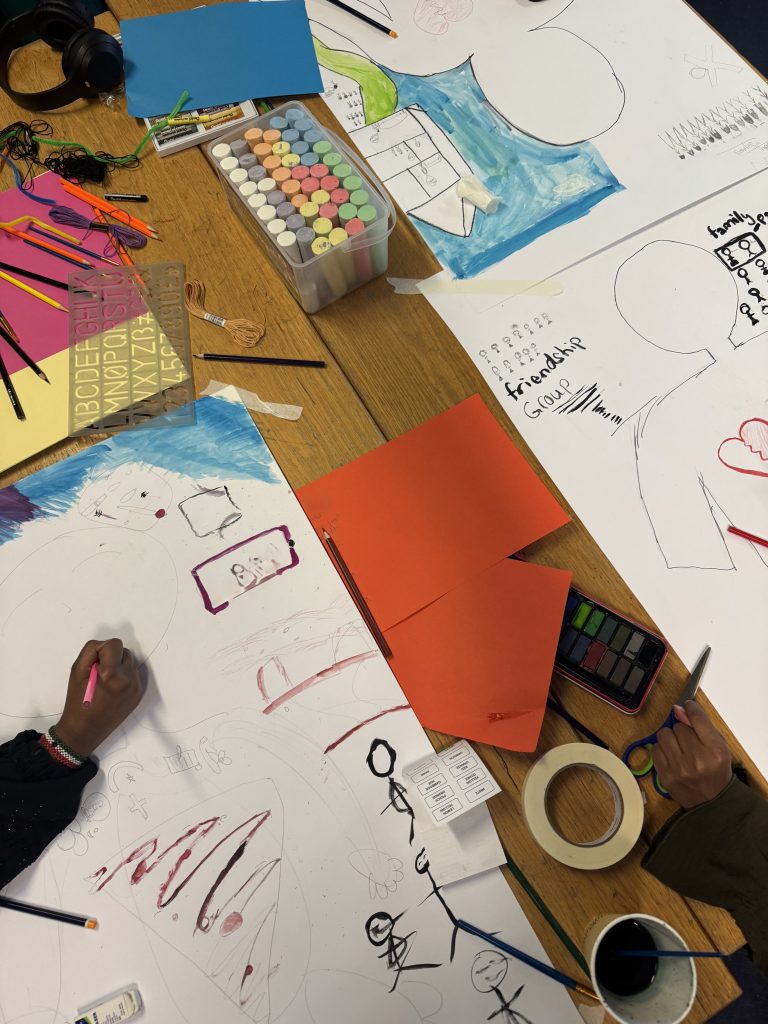
This research reflection explores one theme that emerged from a body-mapping workshop with Black Somali Muslim children and young people in Bristol in 2025. Delivered in partnership with Future Pages, a Community Interest Company supporting children with Special Educational Needs and Disabilities (SEND), the workshop brought together children and young people aged 6 to 18.
Using stories, words, colours, symbols, and images, children and young people created body maps to reflect on their experiences, identities, and everyday school lives. The body maps generated rich conversations about belonging, friendship, identity, and safety. The reflection below focuses on one recurring feature that appeared across many of the body maps: the word “beef”. Rather than interpreting these references simply as accounts of conflict, I consider what they reveal about the structural conditions shaping Black Somali Muslim children’s everyday experiences of school, as this recurrence invites us to ask:
What are the social and structural conditions that make conflict such a familiar feature of children’s lives?
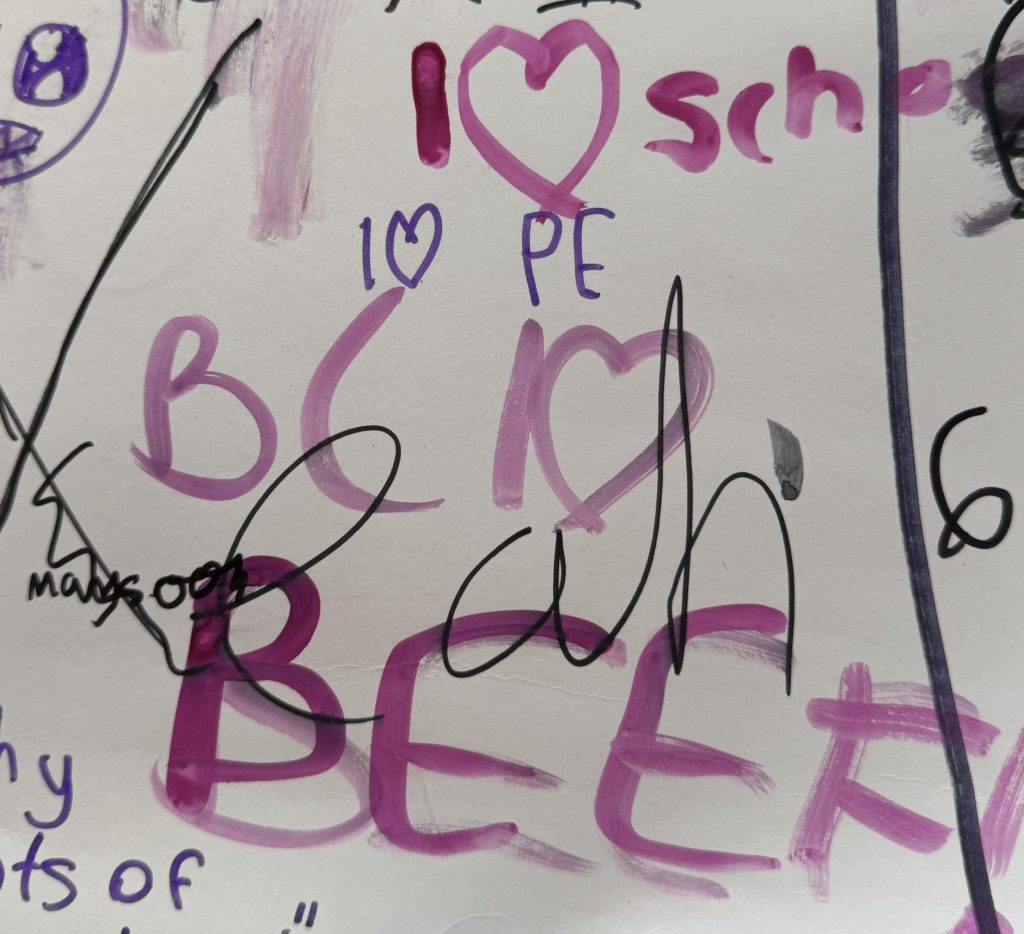
Understanding “beef”
For Black Somali Muslim children, experiences of schooling are shaped by the intersections of race, faith, ethnicity, and age. Research on anti-Blackness, Islamophobia, racialised surveillance, and adultification demonstrates that Black children are often positioned as older, more threatening, and more culpable than their peers (Davis, 2022; Monzon, 2026). These structural conditions shape not only how children are perceived, but also how they come to move through school spaces.
The body maps suggest that vigilance and self-defence become important ways of navigating everyday school life. Many children described being alert to conflict, aware of how they were perceived by others, and prepared to respond to potential threats. In this context, “beef” may be understood as more than fighting. It becomes a language through which children make sense of safety, belonging, respect, and the possibility of harm.
This analysis does not suggest that conflict is inevitable for Black Somali Muslim children. Rather, it asks how structural inequalities create conditions in which hyper-vigilance becomes ordinary. Living within environments shaped by anti-Blackness and Islamophobia may require children to continually assess risk, anticipate hostility, and negotiate their social position. In this sense, the body maps reveal not only children’s experiences of conflict, but also the embodied labour of moving through school while carrying the weight of racialised expectations.
References
Monzon, J. (2026) ‘Black girls are owed their childhood, not adultification’, Black South West Network, 5 May. Available at: https://www.blacksouthwestnetwork.org/blog/black-girls-are-owed-their-childhood-not-adultification (Accessed: 17 July 2026).
Davis, J. (2022) Adultification Bias within Child Protection and Safeguarding. Academic Insights 2022/06. HM Inspectorate of Probation.