
The Rewriting of A Nation: A Story from The Bahamas
The Rewriting of A Nation: A Story from The Bahamas
-
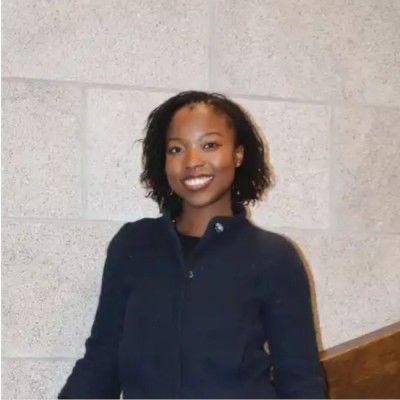 Miah Dionne
Miah Dionne is a Bahamian educator and youth worker who focuses on reparatory justice in the Caribbean.
October 2026
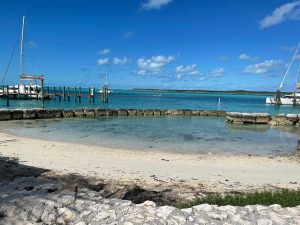
History has not been kind to “The Bahamas”. The quotations indicate my passive rejection of the renaming of the beautiful collection of islands I call home. The Indigenous Lucayan people used Bahama for one island, but other names like Guanima, Guanahani and Ciguateo have been decommissioned. The Lucayan people (a subset of the Indigenous Taino folk of the Caribbean) who would have used these words suffered genocide. However, this is not permission for us, as Bahamians, not to say their names, to know their cultures and appreciate their contributions to the land we now call home. The current demographic of the Bahamas is overwhelmingly the descendants of enslaved persons, as ~90% of the population identifies as Black. This configuration is not a coincidence, as it was purposefully constructed through the horrors of human trafficking during the Trans-Atlantic Chattel Slave Trade. Today, Bahamians grapple with the nation’s legacy, using education as a tool to address the heinous histories and build better futures.
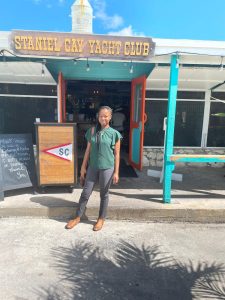
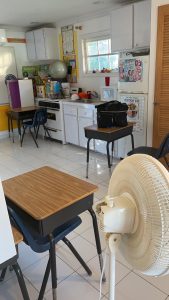
I often refer to my first year of teaching as the genesis of my radicalisation. Through my teaching experiences, I began to epistemologically interrogate the Bahamian educational framework. I recognised that the “goal” of that framework was the duplication of North American teaching practices that did not appropriately engage with indigeneity and our identity as Bahamians, predominantly Black folk and members of the wider Caribbean. My first teaching placement was on Staniel Cay, home to the Staniel Cay Yacht Club (SCYC); a hub for those with fabulous yachts to dock their lavish vessels and stay in bungalows that cost more than the average Bahamian’s monthly rent payment, for one night. SCYC would be a 10-minute walk from a kitchen in a repurposed house that would act as my classroom. What infuriated me most was the stark dichotomy between my decrepit and mouldy kitchen classroom and the luxurious SCYC that hosted the globe’s rich and famous. There lived a cognitive dissonance for us to accept the conditions that lay between the Black Bahamian population and the yacht owners. I dived into books to understand how dystopian it felt to see the mainly white Western patrons of the SCYC be served hand and foot by the mainly Black Bahamian population. I discovered the term ‘racial capitalism’, and was enraged that these topics of power dynamics, race and class were not taught during my time at university. I wondered if this knowledge would have changed how I felt. Was I simply frustrated at the cramped condition of my kitchen classroom, or was I realising a system of twisted poetic design meant to entrap and force educational servitude?
I left the cay and my post as a teacher at the Ministry of Education, to pursue my Master’s degree at McGill University in Education and Society. There, I grew my love for organising in Black spaces. I led Black Students Breathe, a group supporting the mental health of Black students on campus. I served as Senior Editor of the McGill Journal of African Studies for 2 years, reclaiming the narratives of the diaspora. I also worked on Montreal’s Black Teacher Archive, preserving and cherishing the relics of activism and resistance found in the classroom. While studying abroad, Britain would finally return 10,000 Bahamian historical archives it had withheld that tell our country’s history. Why would this knowledge be kept from Bahamians? This informed my research motive and thesis as I investigate what power lies in self-knowledge, especially as a Black Caribbean woman.
My thesis looks at the first secondary school history textbook written by Bahamians. In my thesis, I evaluate how the textbook positions students/youth in The Bahamas as social and civic actors, utilising the theory of Plantation Pedagogy by Laurette Bristol to explore the legacy of colonialism on post-slavery education societies in The Caribbean. As for my work in The Bahamas, I work on the educational arm of The Bahamas National Reparations Committee. I do consciousness-raising work by hosting public education campaigns on our social media, most notably TikToks and sharing our message on national radio. The Bahamas stands firmly with the region in calls for reparations, and we are using education as a means to speak truth to power. Although others have been writing the history of The Bahamas, it is now our time to hold the pen.
Further Reading Suggestions:
1) Plantation Pedagogy: A Postcolonial and Global Perspective by Laurette Bristol
2) Paradise and Plantation: Tourism and Culture in the Anglophone Caribbean by Ian Gregory Strachan
3) Black Marxism: The Making of the Black Radical Tradition by Cedric Robinson
4) Reconsidering Reparations by Olúfẹ́mi O. Táíwò
Guest contributions to the Repair-Ed blog represent the perspectives of the authors.